News

Why choose solid rubber tires instead of traditional tires?

2026-02-03 0 Leave me a message

In modern industrial and logistics equipment, the choice of tires is of great significance. The traditional pneumatic tires (inflatable tires) used to be the standard for most vehicles and equipment, but with the continuous advancement of technology, solid rubber tires have gradually become the preferred choice in many situations. Solid rubber tires, as the name suggests, are entirely composed of strong rubber and have no air chambers, possessing unique advantages and applicability, and thus are widely used in forklifts, industrial vehicles, bulldozers, sweeper trucks, airport trolleys, and other fields. This article will deeply analyze the reasons why solid rubber tires are chosen over traditional tires in certain circumstances, and explore the advantages and application scenarios of solid rubber tires.

solid tires

I. Definition and Working Principle of Solid Rubber Tyres

Solid rubber tires are tires entirely made of rubber materials, with no air filling inside. Due to their design structure, they are significantly different from pneumatic tires (inflated tires). Pneumatic tires utilize the internal air as a support to give the tires elasticity and cushioning properties, while solid tires rely on the physical characteristics of the rubber itself to provide support, compression resistance and shock absorption functions.

Compared with pneumatic tires, solid rubber tires have higher hardness, greater durability and a longer service life. They are suitable for environments that require high strength and long-term stable operation, especially in heavy industrial equipment, transportation equipment and scenarios with high load operations.

II. The main differences between solid rubber tires and traditional pneumatic tires

Structural differences:

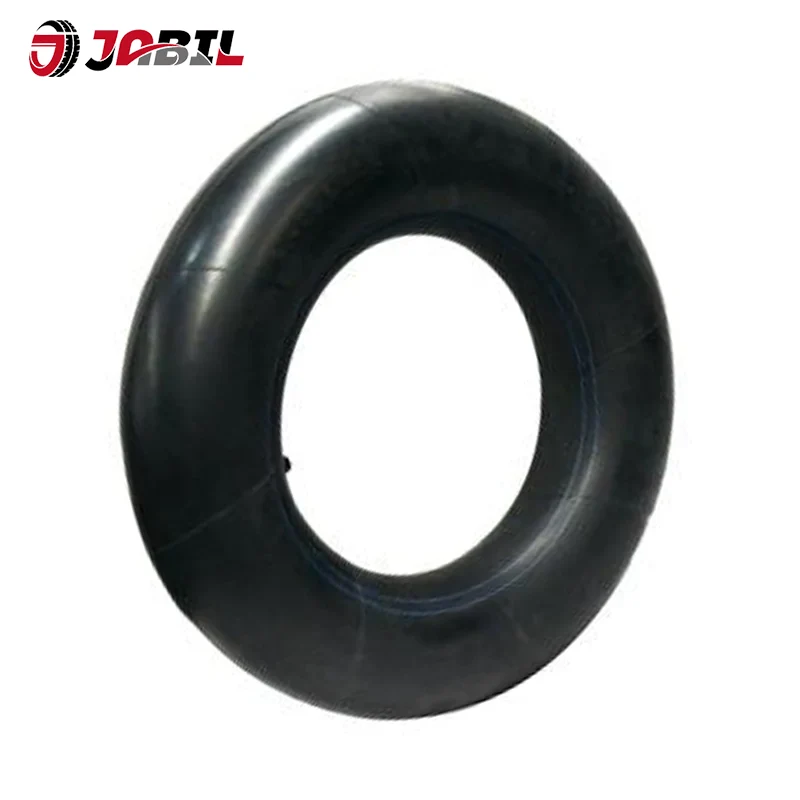
Traditional pneumatic tires are usually composed of three parts: the outer rubber layer, the inner tube, and the air chamber. When the air chamber is inflated, it provides support and cushioning for the tire. On the contrary, solid rubber tires have no inner tube or air chamber and are entirely made of strong rubber materials. Therefore, the structure of solid rubber tires is more simple and is less prone to problems such as air leakage and tire blowout.

Comfort and cushioning:

Inflatable tires, due to the presence of gas, can provide better buffering effects and reduce vibrations, making the vehicle's travel on uneven roads more stable and comfortable. However, solid rubber tires have poorer buffering performance. Although they can withstand higher loads, they are not suitable for situations where driving comfort is highly demanded.

Durability and Maintenance:

Solid rubber tires have greater durability compared to pneumatic tires. Since there is no gas providing support, solid rubber tires are less susceptible to external temperature changes, environmental humidity, and other factors. They can withstand high and low temperatures as well as harsh working conditions, and require almost no regular inflation or maintenance. In contrast, pneumatic tires need regular checks of air pressure and must be repaired or replaced promptly if there is a leak, damage, or other issues.

Safety:

Solid rubber tires have no air chambers and thus have almost no risk of tire blowout or deflation. In some harsh or high-load working environments, choosing solid rubber tires can effectively prevent the blowout problem that pneumatic tires may encounter, reducing equipment downtime and safety hazards.

III. Advantages of Choosing Solid Rubber Tires

Avoiding tire blowouts and air leaks

One of the weaknesses of pneumatic tires is that they are prone to tire blowouts or air leaks, which may pose serious safety risks in industrial environments and transportation sectors. Especially in high-load, complex terrains or harsh weather conditions, pneumatic tires may be damaged due to insufficient air pressure or external impacts, resulting in production disruptions or accidents. In contrast, solid rubber tires, without inner tubes or air chambers, are less likely to experience tire blowouts or air leaks even when subjected to sharp-object impacts or high-speed collisions. Therefore, solid rubber tires can significantly enhance safety and operational reliability.

Higher durability and longer service life

Solid rubber tires are more wear-resistant compared to pneumatic tires and can withstand heavier loads. Due to their sturdy rubber structure, solid tires can operate continuously under high load and high intensity conditions, and are less prone to wear or damage. Especially in high-temperature and harsh environments, solid rubber tires are much more durable than pneumatic tires, reducing the frequency of tire replacements and maintenance costs.

No maintenance required, reducing operating costs

Unlike traditional tires, solid rubber tires do not require regular checks of air pressure, nor do they need to worry about maintenance issues such as air leakage or tire blowouts. They require almost no maintenance work and can significantly reduce the daily maintenance costs of vehicles or equipment. At the same time, due to their longer service life and high-strength performance, the overall operating costs are lower.。

Adapt to harsh environments

In many industrial and mining environments, pneumatic tires perform poorly due to their susceptibility to environmental factors. For instance, sharp rocks or metal objects on the ground may cause a blowout or puncture in pneumatic tires, while solid rubber tires are less prone to damage and can continue to operate stably under these harsh conditions. Moreover, solid tires perform exceptionally well in high, low, or humid environments, whereas pneumatic tires may be affected by changes in air pressure.

Saving time and enhancing work efficiency

Equipment with solid rubber tires usually does not require pressure testing and adjustment, thus saving maintenance and downtime. Moreover, due to their longer service life and higher wear resistance, the frequency of tire replacement is reduced, ensuring the equipment can operate continuously and stably, and improving the overall efficiency.


Related News
Leave me a message
X
We use cookies to offer you a better browsing experience, analyze site traffic and personalize content. By using this site, you agree to our use of cookies. Privacy Policy
Reject Accept