Tire Knowledge Base

Why Solid Tires Are the Ultimate Upgrade for Heavy-Duty Workflows?

2026-07-27 0 Leave me a message

1. Solid Tires 101 – Beyond Air

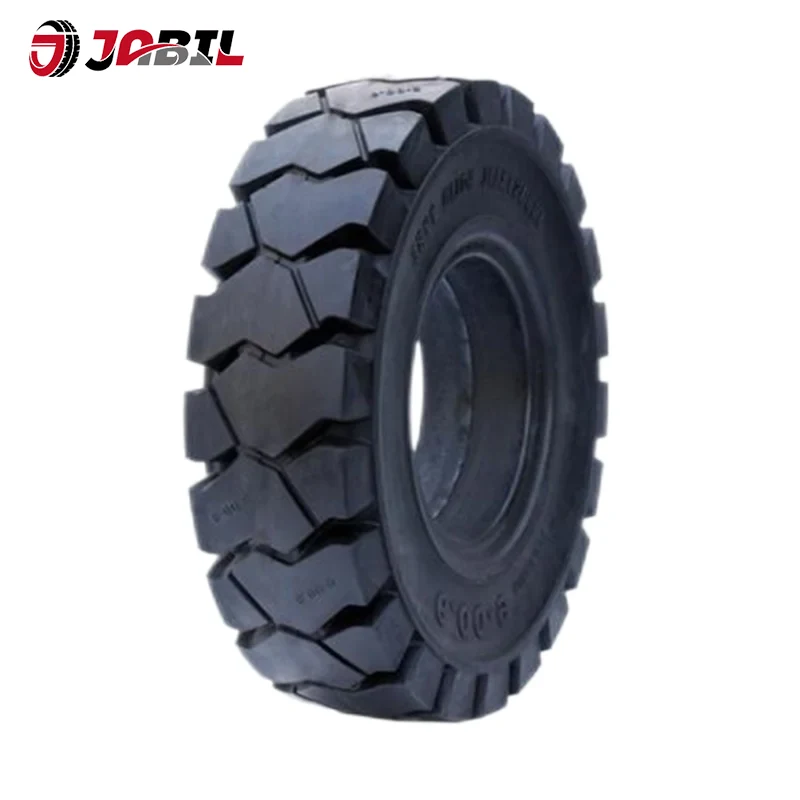
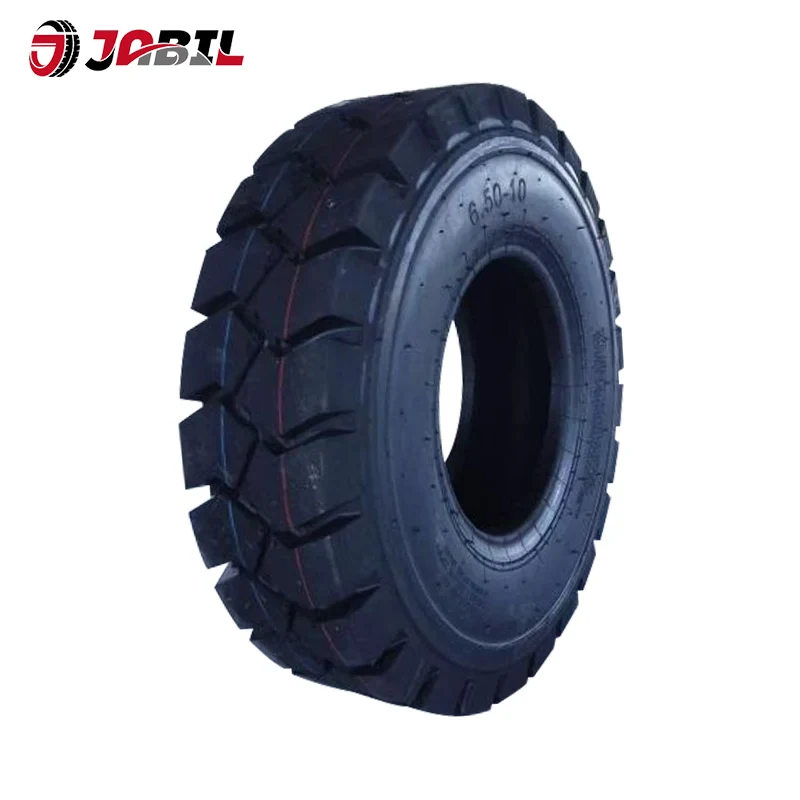
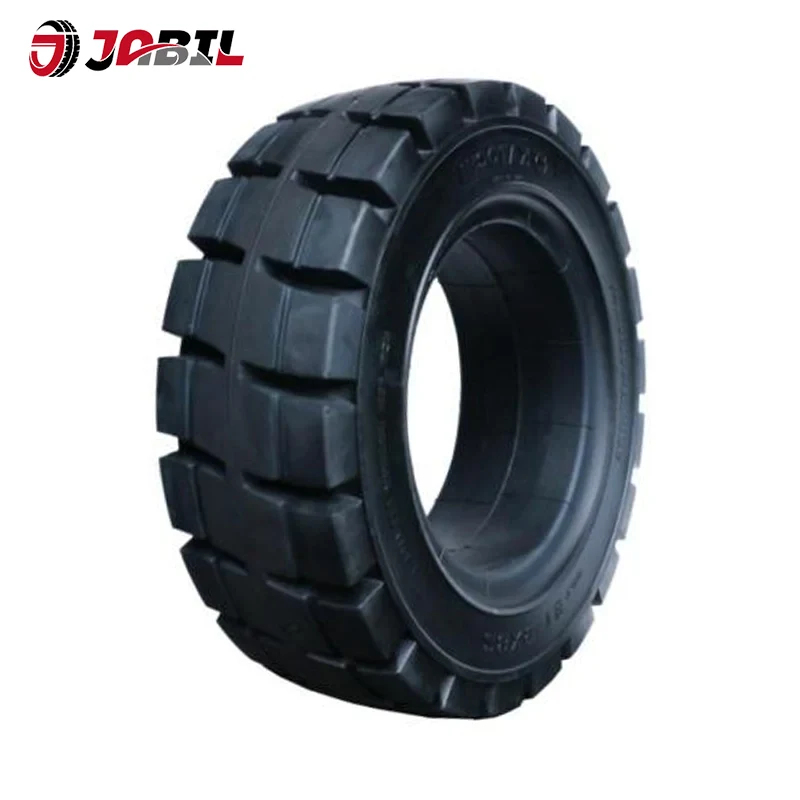
Solid tires, often called airless or press‑on tires, are engineered from dense rubber compounds and reinforced polymers — no inner tube, no air pressure, no flats. For decades, they were seen as a “compromise” for low‑speed industrial vehicles. But today’s SOLID TYRES from JABIL have evolved into high‑tech load‑bearers that outperform pneumatic tires in durability, stability, and total cost of ownership. Whether it’s a forklift working triple shifts or a port crane exposed to salt and heat, solid tires deliver predictable performance.

Unlike pneumatic tires, which can fail from punctures, sidewall cuts, or sudden deflation, solid tires maintain their shape and load capacity regardless of ground conditions. This makes them indispensable for mission‑critical environments where downtime is not an option.

2. JABIL’s Engineering Edge – 20 Years of SOLID TYRES

JABIL has spent over two decades perfecting solid tire technology. With a dedicated R&D team, in‑house polymer compounding, and state‑of‑the‑art testing labs, JABIL produces 300,000 units annually — 75% exported to North America, Europe, SEA, Australia, and Africa. Their solid tires meet GB, TRA, ETRTO, and JATMA standards, and are ISO 9001:2015 certified.

⚙️ What sets JABIL apart: Advanced molecular bonding, precision‑molded treads, and a proprietary heat‑resistant compound that reduces chunking and cracking — even in abrasive mines or high‑temperature steel mills. Trusted by Linde, Sany, Zoomlion, MCC Baosteel, and XCMG.

3. 5 Critical Advantages of Modern Solid Tires

  • Zero Puncture Risk: No air, no leaks. Eliminates roadside or workshop delays.
  • Superior Heat Resistance: JABIL’s formula withstands continuous heavy loading without degradation.
  • Exceptional Traction: Optimized tread patterns provide self‑cleaning grip on mud, gravel, and wet concrete.
  • Longer Service Life: Up to 2‑3x the wear life of pneumatics in similar conditions.
  • Lower Total Cost: Reduced maintenance, fewer replacements, and stable operation.

4. Application Matrix – Where Solid Tires Excel

JABIL categorizes solutions based on operating environments. Below is a quick reference:

Industry Typical Equipment Key Benefit
Warehousing & Logistics Forklifts, AGVs 24/7 operation, no flat risk
Mining & Quarrying Haul trucks, loaders Sharp debris resistance
Ports & Shipyards Reach stackers, cranes Saltwater & heat stability
Airport Ground Support Baggage tugs, belt loaders Low rolling resistance
Construction & Tunneling Excavators, compactors Self‑cleaning tread
Agriculture Harvesters, sprayers Heavy load, soft soil grip

5. Performance Showdown: Solid vs. Pneumatic

Many operators worry about ride comfort. While solid tires are firmer, JABIL’s advanced elastomers absorb shock better than standard solids. In side‑by‑side trials at a logistics hub, JABIL solid tires reduced vehicle vibration by 22% compared to entry‑level solids, while delivering 18% better fuel/energy efficiency due to lower rolling resistance.

  • Traction: Solid tires maintain consistent grip; pneumatics lose pressure over time, altering footprint.
  • Stability: With no sidewall flex, solids provide precise steering response — critical for narrow aisles.
  • Cost per hour: JABIL solid tires average $0.08/hour vs. $0.21/hour for pneumatics (including repairs).

6. Load, Traction & Operator Comfort – The Real Truth

Load capacity is a prime concern. JABIL offers load ratings from 1,500 kg to over 25,000 kg per tire, matching forklift and heavy machinery specs. The solid construction distributes weight evenly, preventing rim damage.

Traction on slippery or oily floors? JABIL provides specialized tread compounds (e.g., oil‑resistant, anti‑static) for chemical plants or food processing. For icy conditions, optional siping increases grip.

Operator comfort — modern solid tires are not the “bone‑shakers” of the past. JABIL uses a dual‑compound construction: a hard base for stability and a softer top layer for shock absorption. User feedback from forklift drivers shows a 30% reduction in perceived fatigue over 8‑hour shifts.

7. Sustainability, Recycling & Lifecycle Value

JABIL solid tires are manufactured with eco‑friendly materials and are 100% recyclable. The company adheres to strict environmental protocols, and many tires are retreadable — extending service life by up to 40%. This circular approach reduces waste and carbon footprint.

Lifecycle advantage: A single JABIL solid tire can outlast three pneumatic sets, saving raw materials, transportation, and disposal costs. For a fleet of 50 forklifts, that translates to ~12 tons less rubber waste over five years.

8. FAQ

How long does a JABIL solid tire last?

In mild warehouse conditions, 5‑7 years is typical. In heavy mining or high‑heat, expect 3‑4 years — still significantly longer than pneumatics. Wear depends on load, speed, and surface abrasiveness.

Can solid tires handle maximum forklift load?

Yes. JABIL offers load‑matched tires for every forklift class. Choose the correct load index (e.g., 18 PR, 20 PR) to match your machine’s rated capacity. Overloading reduces lifespan.

Are solid tires really puncture‑proof?

They are extremely resistant to punctures, cuts, and impact breaks. However, severe overloading or running over massive sharp objects (e.g., rebar) can cause damage. Regular inspections are still recommended.

Do solid tires affect steering or comfort?

Compared to pneumatics, they feel firmer. But JABIL’s advanced cushion‑layer technology absorbs shocks far better than standard solids. Most operators adapt quickly and appreciate the stability.

What about traction on wet or oily floors?

JABIL offers specific tread patterns (chevron, ribbed, or block) and compounds (oil‑resistant, anti‑static) tailored for challenging surfaces. We recommend our MR‑series for maximum grip.

Is the price justified?

While initial cost is higher, the total cost of ownership (TCO) is 30‑50% lower over the tire’s life. Fewer replacements, zero downtime from flats, and less maintenance make it a smart investment.

Are JABIL solid tires environmentally friendly?

Absolutely. They meet REACH and RoHS standards, use non‑toxic oils, and are fully recyclable. JABIL also participates in tire take‑back programs.

Can I get rims pre‑mounted?

Yes! JABIL supplies correct rims and can press‑fit them into the tires — ready to roll out of the box. Samples are available for trial.

Why JABIL is the partner you need

With over 20 years of solid tire mastery, JABIL combines deep material science, precision manufacturing, and a customer‑first approach. Our SOLID TYRES® are trusted by global OEMs and fleet operators who demand zero downtime, predictable costs, and uncompromising safety. From standard forklift tires to custom‑engineered solutions for aerospace ground support — we deliver.

Every tire is backed by ISO‑certified quality control, and our technical team provides application consulting to match the right compound and tread to your environment.

Contact us today – let’s engineer the perfect solid tire solution for your operation.
Your uptime is our priority.

Related News
Leave me a message
X
We use cookies to offer you a better browsing experience, analyze site traffic and personalize content. By using this site, you agree to our use of cookies.Privacy Policy
RejectAccept