Table of Contents
Defining OTR Tires — Beyond the Pavement
OTR Tires, an abbreviation for Off-The-Road tires, represent a distinct category of pneumatic and solid tires engineered exclusively for off-highway applications. Unlike standard passenger or commercial truck tires that spend their service lives on paved surfaces, OTR Tires operate in environments where asphalt and concrete are foreign concepts — mines, quarries, construction sites, ports, and agricultural fields.
These tires are characterized by their massive dimensions, extraordinary load-bearing capacity, and specialized rubber compounds formulated to resist cutting, chipping, abrasion, and heat degradation. A single large OTR Tire used on a rigid dump truck can weigh over 1,000 kilograms and cost as much as a small automobile. The sheer scale of these components reflects the magnitude of the equipment they serve — haul trucks carrying payloads exceeding 300 tons, loaders moving millions of tons of material annually, and dozers reshaping landscapes.
What fundamentally distinguishes OTR Tires from their on-road counterparts is not merely size but purpose. Every design decision — from tread geometry to carcass construction to compound chemistry — prioritizes durability, traction, and thermal stability over ride comfort, fuel efficiency, or noise reduction. The operating environment dictates these priorities: sharp rock fragments that would puncture a standard tire barely scratch the surface of a well-engineered OTR compound; sustained heavy loads that would overheat a highway tire are routine operating conditions for an off-the-road design.
Understanding OTR Tires requires appreciating the full spectrum of their applications. These tires equip wheel loaders, bulldozers, articulated dump trucks, rigid-frame haulers, motor graders, forklifts, underground mining vehicles, and port handling equipment. Each machine type imposes unique demands on the tire, driving the remarkable diversity of tread patterns, constructions, and size ranges available in the market today.
The Anatomy of an OTR Tire — Engineering Under Pressure
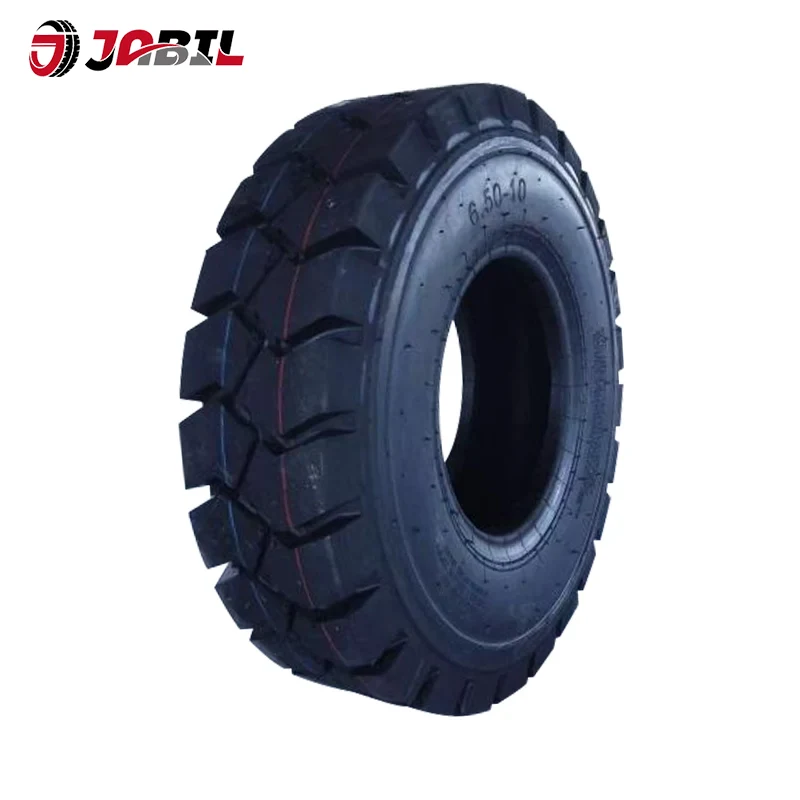
An OTR Tire is not a monolithic rubber mass but a precisely engineered composite structure comprising multiple functional zones, each serving a critical purpose. Understanding this anatomy is essential for proper selection, maintenance, and failure diagnosis.
The Tread — The Ground Interface
The tread is the outermost layer that directly contacts the ground. It provides traction through strategically designed lugs and grooves while offering wear resistance through specialized rubber compounds. Tread depth is the primary wear metric and varies significantly across applications — from standard-depth E-3/L-3 patterns to extra-deep E-4/L-5 designs exceeding 49 millimeters in depth. The tread's pattern and depth directly influence traction, self-cleaning capability, and heat generation during operation.
The Shoulder — The Transition Zone
Where the tread meets the sidewall, the shoulder region governs handling characteristics and absorbs cornering and scrubbing loads. Scalloping or one-sided shoulder wear often signals alignment issues or improper inflation. This zone is particularly vulnerable in applications involving frequent turning or operation on uneven terrain.
The Sidewall — The Flexible Shield
The sidewall is the flexible vertical wall that absorbs shock, protects the internal carcass, and carries sidewall markings containing critical specification data. Cuts, bulges, "golf ball" deformations, and fatigue cracking manifest first in this region. A sidewall injury that exposes reinforcing cords typically renders the tire unserviceable and non-repairable.
The Bead — The Anchoring System
The bead is the inner edge that locks the tire to the rim and maintains the pneumatic seal. Proper bead seating is critical for preventing air loss and ensuring stable tire performance. Inspection should include checking the bead seat area for leaks and examining the valve stem and core for slow air loss using soapy water.
The Carcass — The Load-Bearing Skeleton
The carcass comprises multiple steel or fabric plies that carry the operational load. A sound carcass is what makes a tire a candidate for retreading — protecting this structural core through proper inflation and timely repair is the primary objective of all maintenance practices. The carcass's integrity determines the tire's ultimate service life and retreadability.
A fundamental principle governs all OTR Tire performance: air carries the weight, not the tire. The casing merely holds the air in shape. Almost every premature failure — thermal degradation, uneven wear, sidewall fatigue — traces back to incorrect inflation pressure for the applied load. This principle underpins all selection and maintenance decisions.
Classification Systems — Decoding the Codes
The OTR Tire industry employs standardized classification systems to communicate tire capabilities, applications, and performance characteristics. Understanding these codes is essential for making informed procurement decisions.
TRA Code System
The Tire and Rim Association (TRA) code system categorizes OTR Tires by application type and tread depth. The first letter indicates the primary machine application:
- E — Earthmover (rigid dump trucks, articulated haulers)
- L — Loader (wheel loaders, dozers)
- G — Grader (motor graders)
The number following the letter indicates tread depth and service severity:
- 2 — Traction pattern (moderate depth)
- 3 — Rock/standard depth (general service)
- 4 — Deep tread (severe service)
- 5 — Extra-deep tread (extreme service)
For example, an L-3 tire is a loader tire with standard rock tread depth, while an L-5 features extra-deep tread for the most demanding applications. Many tires carry dual markings — such as E-3/L-3 — indicating suitability for both earthmover and loader operations.
Dual Marked Tires
Dual marked OTR Tires carry two TRA codes and corresponding load/speed ratings. A Continental 29.5R25 EM-Master E3/L3, for instance, may have different load capacities and speed ratings depending on whether it is used in earthmover or loader service. This flexibility allows operators to standardize on a single tire model across multiple equipment types, simplifying inventory management.
TKPH / TMPH Rating
The TKPH (ton-kilometer-per-hour) or TMPH (ton-miles-per-hour) rating quantifies a tire's working capacity. Every OTR Tire generates heat during operation due to flexing and deformation. When heat generation exceeds dissipation, internal temperatures rise to levels that can damage rubber compounds and structural components. The TKPH rating indicates the maximum workload a tire can sustain without thermal degradation, making it a critical selection parameter for high-speed, long-haul applications.
Construction Types — Radial vs. Bias vs. Solid
OTR Tires are manufactured in three primary construction configurations, each offering distinct performance characteristics suited to specific applications.
Radial Construction
Radial OTR Tires feature steel cords oriented at 90 degrees to the direction of travel, with a flexible belt package beneath the tread. This construction provides superior heat dissipation, longer tread life, and better fuel efficiency compared to bias designs. Radial tires typically offer higher speed ratings and are preferred for applications involving longer haul distances and higher operating speeds. The flexible sidewalls of radial construction also provide improved ride quality and reduced vibration transfer to the equipment.
Bias (Cross-Ply) Construction
Bias tires feature cords laid at alternating angles across the carcass, creating a stiffer, more robust structure. This construction offers excellent stability, superior self-cleaning capability in muddy conditions, and high resistance to cutting and damage. Bias OTR Tires are often preferred for slow-speed, high-torque applications where impact resistance and puncture protection are paramount, such as underground mining and scrap handling operations.
Solid Construction
Solid OTR Tires eliminate the pneumatic component entirely, using solid rubber or polyurethane-filled constructions. These tires are immune to punctures and air loss, making them ideal for applications where downtime from flats is unacceptable — such as scrap yards, recycling facilities, and ports. Solid tires offer excellent load capacity but sacrifice ride quality and traction compared to pneumatic alternatives.
The choice between radial, bias, and solid construction depends on the specific operating conditions: haul distance, speed, terrain characteristics, and downtime tolerance all influence this decision.
Tread Patterns and Their Applications
Tread pattern selection represents one of the most critical decisions in OTR Tire specification. The wrong pattern can compromise traction, accelerate wear, or lead to premature failure.
| TRA Code | Pattern Type | Primary Application | Terrain Suitability |
|---|---|---|---|
| E-2 / L-2 | Traction | General earthmoving | Soft dirt, mud, loose material |
| E-3 / L-3 | Rock / Standard | General quarry and mining | Mixed rock and dirt conditions |
| E-4 / L-4 | Deep Rock | Severe quarry service | Sharp rock, abrasive surfaces |
| L-5 | Extra-Deep Rock | Extreme loader applications | Scrap handling, severe rock |
E-2 and L-2 traction patterns feature aggressive, widely spaced lugs that provide superior grip in soft conditions while offering excellent self-cleaning capability. These patterns excel in muddy environments and loose material applications where traction is the primary concern.
E-3 and L-3 rock patterns represent the industry standard for general service. These designs balance traction, wear resistance, and heat dissipation for mixed operating conditions. They perform adequately in most quarry and mining applications where conditions are not extreme.
E-4 deep rock patterns provide additional rubber volume to absorb cutting and abrasion damage. With tread depths exceeding 49 millimeters, these tires offer extended service life in severe quarry operations where sharp rock fragments continuously threaten tread integrity.
L-5 extra-deep patterns represent the ultimate in tread depth and cut resistance. These tires are reserved for the most demanding loader applications — scrap handling, demolition, and extreme rock service — where maximum protection is required.
Key Selection Factors
Selecting the right OTR Tire requires systematic evaluation of multiple operational parameters. The following factors should guide every procurement decision.
Operating Environment
The physical characteristics of the worksite — road surface conditions, terrain type, and ambient temperatures — fundamentally influence tire selection. Sharp rock environments demand cut-resistant compounds and deep treads; soft, muddy conditions require aggressive traction patterns; high-temperature operations necessitate heat-resistant rubber formulations.
Equipment Type and Load
Different machines impose different demands on OTR Tires. Rigid dump trucks prioritize load capacity, heat dissipation, and long-haul durability. Wheel loaders require traction, cut resistance, and sidewall protection for frequent turning. Articulated haulers need a balance of traction, flotation, and wear resistance. Matching tire specifications to machine type ensures optimal performance and service life.
Haul Distance and Speed
Longer haul distances and higher speeds generate more internal heat, making TKPH ratings critical. Operations with extended haul roads should prioritize radial constructions and tires with high TKPH ratings to prevent thermal degradation. Short-haul, low-speed applications can often use bias constructions without thermal concerns.
Heat Generation and Dissipation
Every OTR Tire generates heat during operation. When heat generation exceeds dissipation, internal temperatures rise, potentially causing compound degradation, belt separation, or carcass failure. Selection must account for site-specific TKPH requirements to ensure the tire's thermal capacity matches operational demands.
Cut and Impact Resistance
Quarry and mining environments expose tires to sharp rock fragments capable of cutting or tearing tread surfaces. Modern OTR Tires use specially formulated cut-resistant compounds incorporating optimized carbon black formulations and rubber elasticity to resist chunking, stone drilling, and impact fatigue. For severe applications, cut resistance may outweigh other performance criteria.
Maintenance Practices That Extend Service Life
Proper maintenance transforms OTR Tires from expensive consumables into long-lasting assets. Most OTR tires do not wear out — they fail prematurely from preventable causes. The following practices maximize service life and minimize downtime.
Inflation Pressure Management
Air pressure is the single most important variable governing OTR Tire life. Even a 10% drop in inflation pressure increases sidewall deflection, accelerates shoulder wear, and raises internal temperatures. Daily pressure checks — preferably before every shift — should be standard operating procedure. Pressure should be adjusted based on actual load, not nominal ratings.
Regular Inspection Protocols
Systematic inspection of each tire zone — tread, shoulder, sidewall, bead, and carcass — identifies developing issues before they become failures. Tread depth measurements at multiple points around the tire detect irregular wear patterns. Sidewall examination reveals cuts, bulges, and fatigue cracking. Bead and valve stem inspection catches slow leaks. Each finding should be recorded in a per-position tire record to track trends over time.
Rotation Programs
Rotating OTR Tires between positions on the same machine — or between machines — equalizes wear and extends overall fleet tire life. Rotation should be scheduled based on run hours rather than calendar time, with position-specific wear patterns guiding the schedule.
Thermal Monitoring
Internal temperature monitoring using TPMS sensors provides early warning of thermal degradation. Predictive maintenance programs use real-time temperature and pressure data to forecast failures before they occur, enabling targeted interventions during scheduled maintenance windows.
Retreading Evaluation
A sound carcass is a valuable asset suitable for retreading. Evaluating casings for retreadability at each removal extends the useful life of the tire and reduces replacement costs. Carcass condition — not tread depth alone — determines retread eligibility.
Industry Trends and Technological Advancements
The OTR Tire industry continues to evolve, driven by advancing equipment capabilities, changing operational demands, and emerging technologies.
Electrification and Automation
Electrification of mining and construction equipment is reshaping OTR Tire requirements. Electric haul trucks and loaders impose different load characteristics and torque profiles compared to diesel-powered machines, influencing tire design parameters. Automated equipment operating without human intervention places premium on tire reliability and predictability.
Advanced Compound Formulations
Rubber compound technology continues to advance, delivering improved cut resistance, heat resistance, and wear performance. Modern compounds incorporate specialized polymers, optimized carbon black formulations, and advanced curing systems to extend service life in increasingly demanding applications.
Predictive Maintenance Integration
Telematics and IoT integration enables real-time monitoring of OTR Tire performance. TPMS sensors, temperature probes, and tread depth gauges feed data to analytics platforms that predict remaining useful life and schedule maintenance interventions. This data-driven approach reduces unscheduled downtime and maximizes tire utilization.
Larger Sizes and Higher Capacities
Equipment continues to grow in size and capacity, driving demand for larger OTR Tires with higher load ratings. Tires for ultra-class haul trucks now exceed 63 inches in rim diameter, with individual tire load capacities approaching 100 metric tons.
Sustainability Initiatives
Environmental considerations increasingly influence OTR Tire design and management. Retreading programs extend tire life and reduce material consumption. Recycled materials are finding their way into tire compounds. Manufacturing processes are becoming more energy-efficient. These trends reflect growing industry awareness of environmental responsibility.
Frequently Asked Questions
E-rated OTR Tires are designed for earthmover applications — primarily rigid and articulated dump trucks used in haulage operations. L-rated tires are designed for loader and dozer applications, where frequent turning, high torque, and aggressive traction requirements dominate. While some tires carry dual E/L markings indicating suitability for both applications, the load and speed ratings differ between the two service types.
Radial OTR Tires offer superior heat dissipation, longer tread life, and better fuel efficiency — ideal for long hauls and higher speeds. Bias tires provide better stability, superior self-cleaning, and higher cut resistance — preferred for slow-speed, high-torque applications in muddy or rocky conditions. The choice depends on your specific operating conditions: haul distance, speed, terrain, and equipment type.
L-5 designates a loader tire with extra-deep rock tread. These tires feature the deepest tread depth available in the loader category, typically exceeding standard L-3 and L-4 patterns significantly. L-5 OTR Tires are reserved for the most demanding applications — scrap handling, demolition, severe rock service — where maximum cut resistance and wear protection are required.
Industry best practice recommends checking OTR Tire inflation pressure daily — preferably before every shift. Pressure should be adjusted based on actual load conditions, not nominal ratings. Even a 10% pressure drop significantly increases sidewall deflection and heat generation, accelerating wear and increasing failure risk.
TKPH (ton-kilometer-per-hour) measures the working capacity of an OTR Tire. Every tire generates heat during operation; when heat generation exceeds dissipation, internal temperatures rise and can damage the tire. The TKPH rating indicates the maximum workload a tire can sustain without thermal degradation. Selecting a tire with TKPH rating matching your site conditions is essential for preventing heat-related failures.
Optimize Your OTR Tire Strategy Now
Whether you are selecting new tires, developing a maintenance program, or exploring retreading options, expert guidance makes the difference between optimal performance and costly downtime.
Contact Us Today