FAQ:
Q1: How do you prevent de-lamination (the rubber peeling off the steel band)?
A: De-lamination is the #1 failure in low-end Industrial Press-On Tires. We use a proprietary Vulcanized Bonding Process with high-grade chemical adhesives. This creates a molecular bond between the rubber and the steel band that is often stronger than the rubber itself, ensuring the tire stays intact under extreme torque.
Q2: What is the benefit of your high-tensile steel band in your Cushion Tires?
A: We use precision-machined, high-tensile steel bands. This ensures a perfect "interference fit" when pressing onto the hub, preventing the tire from spinning or slipping on the rim—a common issue with budget Cushion Tires.
Q3: How does your rubber compound handle 24/7 high-intensity forklift shifts?
A: For multi-shift warehouse operations, we offer a Heat-Resistant compound. It minimizes internal heat buildup, which is the primary cause of thermal blowout and premature wear in Forklift Press-On Tires.
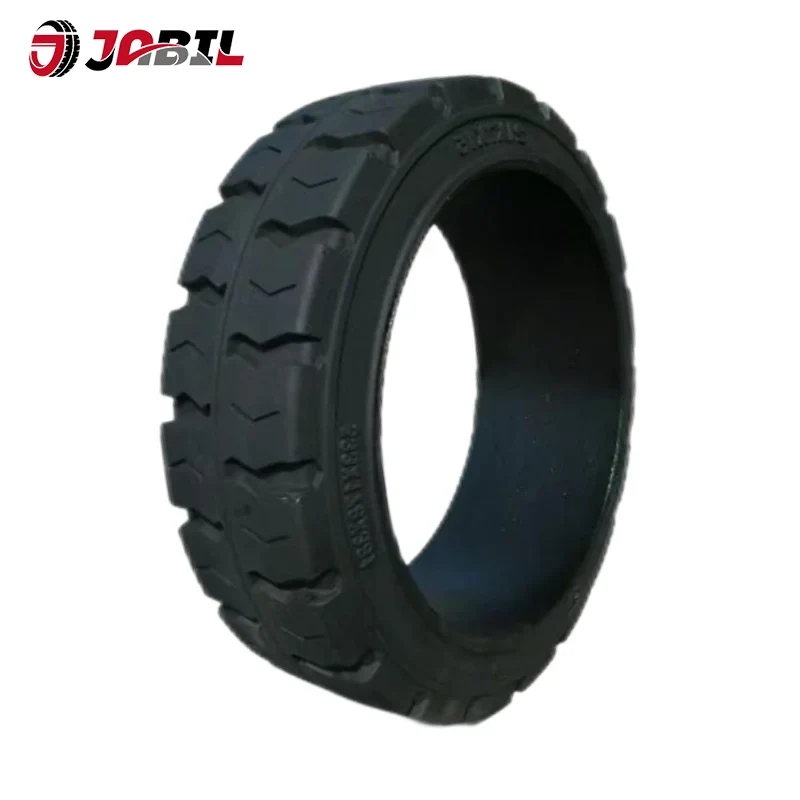
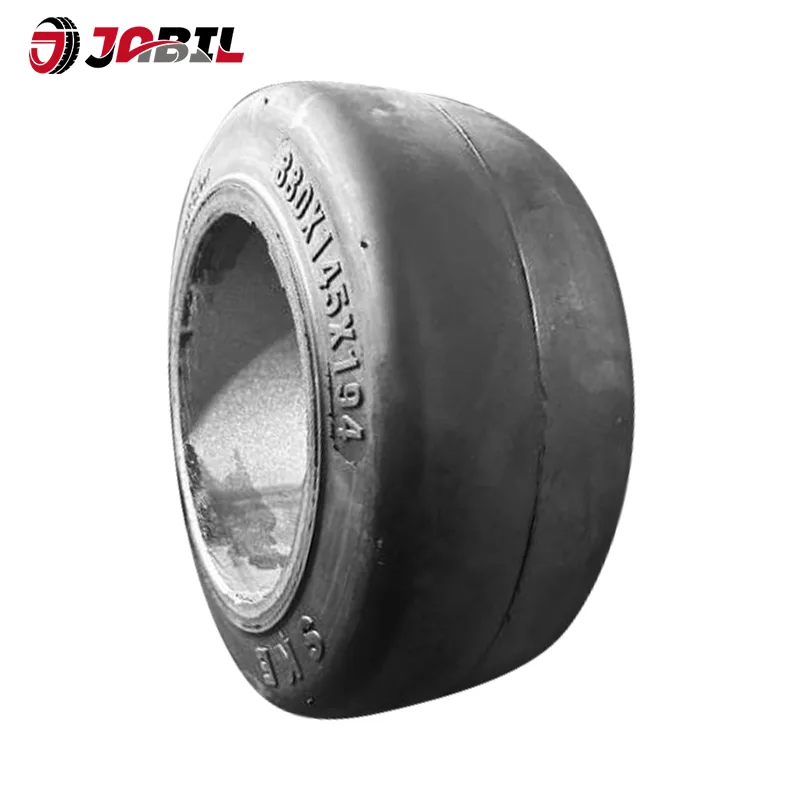
Q4: When should I choose "Smooth" vs. "Traction" (Lugged) tread for my Band Tires?
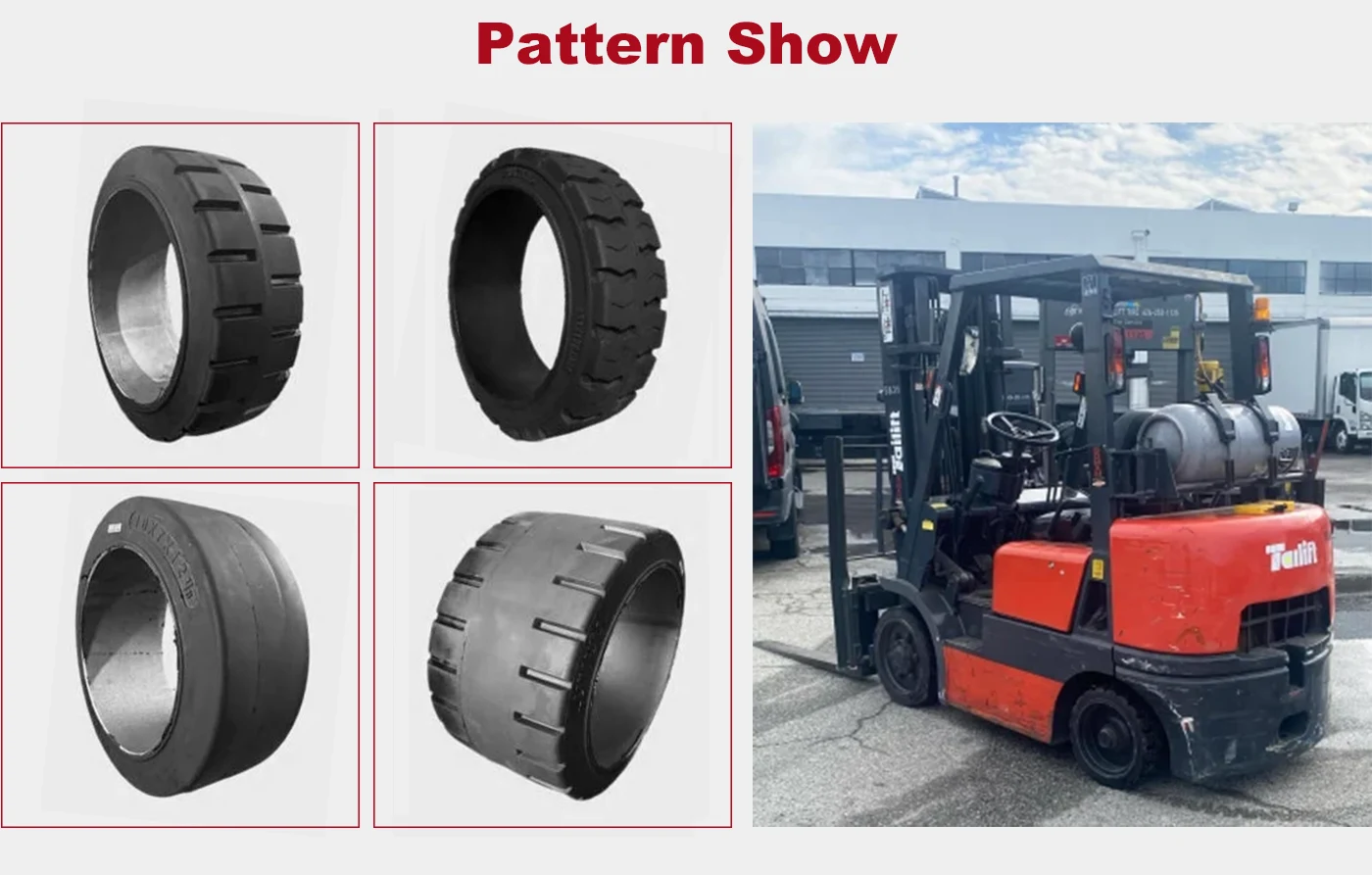
A: Smooth Press-On Tires provide maximum surface contact and stability on dry, indoor floors. Traction Press-On Tires (Lugged) are essential for ramps, wet surfaces, or outdoor-indoor transition areas where extra grip is required.
Q5: Do you offer Non-Marking Press-On Tires for the food or pharma industries?
A: Absolutely. Our Non-Marking Press-On Tires use a specialized silica-based formula that eliminates black carbon streaks on epoxy or light-colored floors, meeting the strict hygiene standards of medical and food facilities.
Q6: Can your tires handle the increased weight of Electric Forklifts (EVs)?
A: Yes. Electric forklifts are heavier due to large battery packs. Our High-Load Press-On Tires are designed with a reinforced base layer to support the weight of heavy counterweights without excessive deflection.
Q7: Do you provide Polyurethane (PU) Press-On Tires in addition to Rubber?
A: Yes. While rubber offers better cushioning, our Polyurethane Press-On Tires provide higher load capacity and lower rolling resistance. We recommend the best material based on your specific floor type and load requirements.
Q8: How do you ensure the precision of the inner diameter for a perfect press-fit?
A: Every steel band is CNC machined to extremely tight tolerances. This ensures that when you use a tire press for your 16x6x10.5 or 21x7x15 sizes, the fit is snug and uniform, preventing "wobble" after installation.
Q9: Can your Press-On tires replace OEM tires on brands like Toyota, Hyster, or Yale?
A: Yes. Our tires are designed as Premium Aftermarket Replacements for major brands including Toyota, Hyster, Yale, Crown, and Raymond. We match the exact dimensions and load ratings of the original equipment.
Q10: Do you offer specialized sizes for Ground Support Equipment at airports?
A: Yes. We produce high-speed and high-load GSE Press-On Tires for baggage tractors and push-back tugs, designed to handle the friction and heat of airport tarmac operations.
Q11: Can I buy the tires as a complete assembly with the hubs pre-installed?
A: We primarily ship the Press-On bands, but for specific high-volume contracts, we can provide the full wheel assembly. Most distributors prefer the bands to optimize shipping weight.