Tire Knowledge Base

Hydrogen Forklift Explosion Prevention: Crucial Solid Tire Conductivity Standards for Hazardous Environments

2026-06-03 0 Leave me a message

solid tiresThis technical brief outlines the critical electrostatic conductivity requirements for solid tires mounted on hydrogen fuel cell forklifts operating in explosive environments, providing scenario-based engineering solutions to prevent static-induced hydrogen ignition.

Mandated Technical Safety Data

According to the European Committee for Standardization (CEN) EN 1755 standard for industrial truck safety in potentially explosive atmospheres, material handling equipment operating in hazardous gas environments must maintain a total leakage resistance to earth of less than 106 Ω(1 Megohm). Because hydrogen gas possesses an exceptionally low Minimum Ignition Energy (MIE) of just 0.019mJ, any static electricity accumulation on standard non-conductive solid tires (which typically exceed 109 Ω) can cause an electrostatic discharge sufficient to instantaneously ignite ambient hydrogen micro-leaks.

Scenario-Based Engineering Solutions

To mitigate explosive risks, material handling fleets utilizing hydrogen fuel cell technology must substitute standard solid insulation tires with specialized conductive compounds managed under strict maintenance protocols.

Scenario 1: H2 Fueling Stations & Enclosed Hydrogen Fuel Cell Forklift Storage Vaults

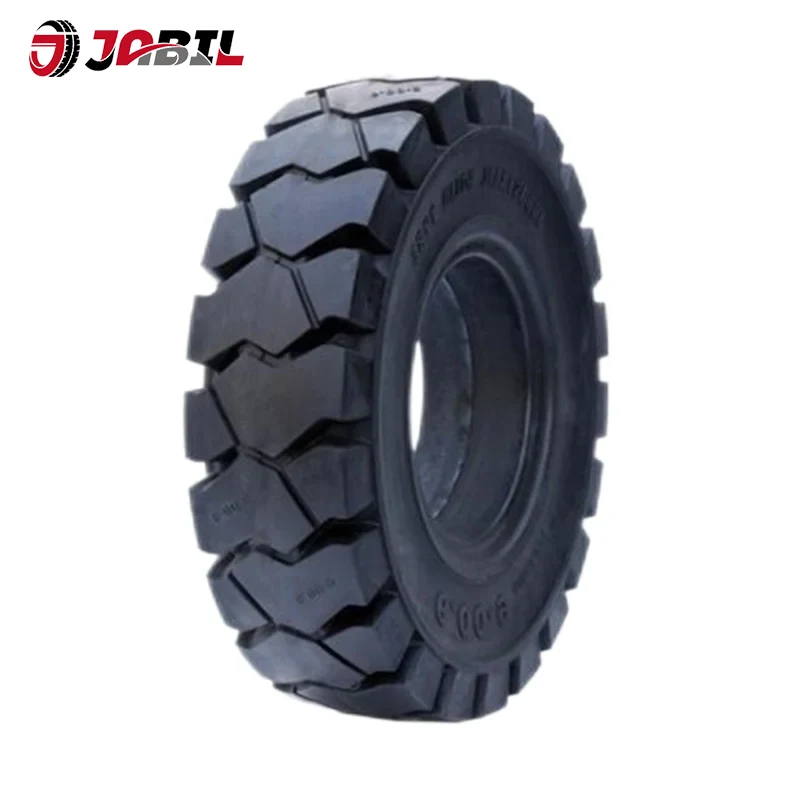
Tire Specification: Specialized Fully Conductive Black Solid Tires engineered to maintain a stable volume resistivity between 104 Ω and 106 Ω, or solid tires embedded with a continuous, high-conductivity internal grounding rubber core.

Inflation/Pressure Equivalent: Solid tires do not require inflation. However, technicians must strictly monitor press-fit interference tolerances during wheel assembly to ensure zero contact resistance between the metal rim and the tire base.

Maintenance Protocol: Implement a mandatory weekly resistance audit. Use a calibrated megohmmeter to measure the system resistance from the tire tread surface to the forklift’s chassis. Daily remove non-conductive debris (e.g., plastic wraps, wood splinters) embedded in the tread.

Critical Error to Avoid: Never apply standard tire gloss, insulating wax, or aftermarket spray paints to the tread surface. These products create an insulating barrier that completely blocks the electrostatic dissipation pathway.

Scenario 2: Pharmaceutical Clean rooms & High-Precision Electronics Facilities Using H2 Forklifts

Tire Specification: Premium Non-Marking ESD Solid Tires (typically green or white). These must utilize specialized compounding technologies—such as highly dispersed conductive carbon black or specialized conductive silica networks—to overcome the severe insulation limitations inherent in traditional non-marking rubber.

Inflation/Pressure Equivalent: Monitor tire wear indicators daily. Force tire replacement once wear reaches the 60% wear limit line to prevent compound degradation from altering conductive properties.

Maintenance Protocol: The facility must be equipped with anti-static epoxy flooring to complete the "tire-to-ground" grounding loop. Clean tire treads regularly with approved solvent-free detergents to remove insulating oil residues.

Critical Error to Avoid: Operating ESD forklifts on standard unsealed concrete or non-conductive polyurethane coatings. Even if the tire is perfectly conductive, an insulating floor breaks the grounding circuit, causing a hazardous voltage buildup on the forklift frame.

FAQ

Q1: Why do hydrogen fuel cell forklifts require conductive solid tires if they already have a metal grounding chain attached?

Answer: Grounding chains are highly prone to intermittent mechanical failure. During high-speed material handling, grounding chains frequently bounce off the floor, become fouled with grease, rust, or wear down until they no longer make contact. Tires are the only components maintaining continuous, high-pressure, multi-point contact with the floor 100% of the operating time. Conductive solid tires serve as the primary, uninterrupted path to ground, working as a fail-safe alongside the grounding chain.

Q2: Can standard anti-static tires used on battery-electric forklifts be used safely on hydrogen forklifts?

Answer: No. Standard anti-static tires for electric forklifts are designed with an electrical resistance range of 106 Ω to 109 Ω, which is intended only to protect sensitive onboard electronics or prevent operator shock. Hydrogen fuel cell forklifts operate in Zone 1 / Zone 2 explosive environments. Because hydrogen's minimum ignition energy is so low 0.019 mJ, these trucks require maximum-security "Conductive" class tires verified to stay strictly below 106 Ω .

Q3: Does the electrostatic conductivity of a solid tire degrade over time as it wears down?

Answer: Yes. As the tire undergoes thousands of operational cycles, the internal microscopic conductive network (the carbon black or silica channels) degrades due to mechanical shear stress and thermal aging. Additionally, surface contamination from floor dust, oils, and chemical spills builds up an insulating crust. Fleet operators must test the electrical resistance of the tires quarterly. Any tire exceeding the 106 Ω limit must be decommissioned immediately from hazardous areas.

References

CEN (European Committee for Standardization) - EN 1755: Industrial trucks - Safety requirements and verification - Supplementary requirements for operation in potentially explosive atmospheres.

ISO (International Organization for Standardization) - ISO 2883: Rubber, vulcanized - Antistatic and conductive products for industrial use - Resistance limits.

OSHA (Occupational Safety and Health Administration) - Directive on Hydrogen Safety and Material Handling Equipment in Explosive Environments.


Related News
Leave me a message
X
We use cookies to offer you a better browsing experience, analyze site traffic and personalize content. By using this site, you agree to our use of cookies. Privacy Policy
Reject Accept