Tire Knowledge Base

How to Prevent Thermal Cracking in Arid Region Agricultural Tires?

2026-05-27 0 Leave me a message

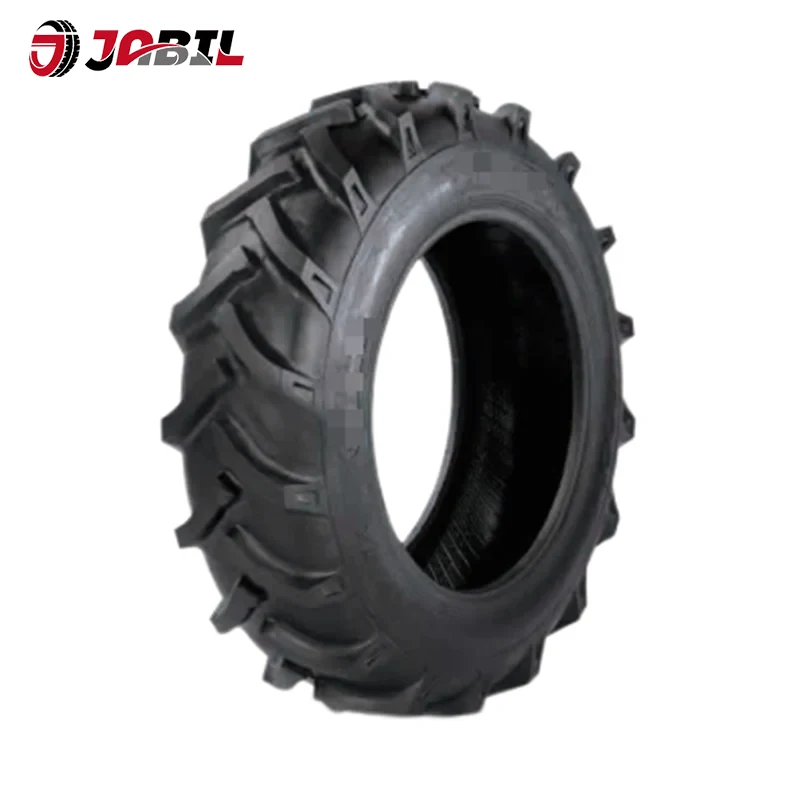
Tractor TiresThis guide provides an in-depth technical analysis of anti-thermal cracking rubber compounds for agricultural tires operating in arid, high-soil-temperature regions, offering actionable inflation and maintenance protocols to eliminate premature tread chipping and lug cracking.


According to a ground thermal conductivity study published in Frontiers in Environmental Science, when ambient summer temperatures in arid or desertified agricultural zones hover between 37°C and 40°C, the direct soil surface temperature under intense solar radiation surges up to 81.9°C (179.4°F). This extreme thermal load accelerates the volatility of anti-ozonants and plasticizers within standard natural rubber (NR) compounds, causing premature rubber embrittlement and catastrophic lug tearing under high tractive shearing forces.

[Source: Frontiers in Environmental Science Research Archive]

Scenario-Based Solutions

To maintain machinery uptime under severe heat, fleet managers must transition from standard agricultural tires to specialized heat-resistant compounding combined with precise cold-inflation management.

Scenario 1: Large Tractors in Arid Reclamation Zones (Deep Tillage Operations)

Tire Specification: High-horsepower agricultural radial tires engineered with a Natural Rubber/Styrene-Butadiene Rubber (NR/SBR) composite blend, reinforced with high-dispersion, low-structure carbon black (e.g., N330) to inhibit crack propagation.

Inflation Pressure: Strictly maintain cold inflation between 1.2 - 1.6 bar (17.4 - 23.2 PSI) depending on ballast configuration.

Maintenance Protocol: Avoid continuous heavy-load deep tillage during peak temperature hours (12:00 PM to 3:00 PM). Never spray cold water directly onto hot tires post-operation to prevent thermal shock micro-cracking.

Critical Error to Avoid: Do not allow high wheel-slip ratios on sun-baked, hardened soil. The localized friction overlaying an 80°C base soil temperature triggers instantaneous thermal degradation, causing massive tread chunking.

Scenario 2: Pivot Irrigation Systems & Windrowers in Sandy, Arid Terrains

Tire Specification: Wide-base, low-ground-pressure (Flotation) specialty tires built with extra tread gauge and maximized loading of highly stable anti-ozonants (e.g., 6PPD) and anti-reversion agents.

Inflation Pressure: Optimize between 1.0 - 1.4 bar (14.5 - 20.3 PSI) to distribute footprint load uniformly over hot sand.

Maintenance Protocol: During seasonal machinery storage, utilize UV-reflective waterproofing sheets to shield tires from direct sunlight, or apply a specialized water-based tire protective coating.

Critical Error to Avoid: Never park unshielded machinery stationary on hot sand exceeding 70°C for extended weeks. Continuous, unidirectional thermal conduction degrades the contact patch, leading to irreversible sidewall and lug baseline weather-cracking.

FAQ

Q1: Why do agricultural tires develop dense cracks at the lug base during summer tillage in dry regions?

Answer: This failure is caused by combined thermal-oxidative aging and flex fatigue. Arid soil surface temperatures exceeding 75°C rapidly bake the tire. As the tire rolls, the lug base experiences maximum stress concentration. If the rubber matrix lacks high-performance heat stabilizers, the polymer chains cleave under heat, initiating micro-cracks at the flex points. Replacing standard tires with a low-heat-generation compound featuring mud-and-stone ejector geometry mitigates this issue.

Q2: Can substituting natural rubber entirely with synthetic rubber (SBR/BR) eliminate high-temperature tire cracking?

Answer: No, a complete substitution is counterproductive. While synthetic rubbers like Styrene-Butadiene (SBR) and Butadiene Rubber (BR) offer superior resistance to thermal-oxidative aging and cracking compared to pure Natural Rubber (NR), they possess lower raw tear strength and elasticity. The optimal solution is a balanced NR/SBR or NR/BR blended matrix where natural rubber provides structural tear resistance and synthetic components arrest crack propagation under thermal loads.

Q3: Should I bleed air out of my tractor tires when the pressure rises during operations on 80°C soil?

Answer: Absolutely not Internal tire pressure naturally escalates by 0.2 - 0.4 bar (3 - 6 PSI) during operation due to external heat transfer and internal kinetic flexing. Bleeding air out of a hot tire causes severe under-inflation once the tire cools down. Running an under-inflated tire generates excessive internal carcass heat, over-flexes the casing plies, and leads to rapid, catastrophic ply separation or sidewall blowouts.

References

1. Frontiers in Environmental Science - Tire and rubber particles in the environment—A case study from a hot arid region (Surface Temperature Analysis).

2. MDPI Agriculture Journal - Parameter Identification of Soil Material Model for Soil Compaction Under Tire Loading.

3. U.S. Tire Manufacturers Association (USTMA) - Care and Service of Agricultural Tires: Thermal and Inflation Management Guidelines

Related News
Leave me a message
X
We use cookies to offer you a better browsing experience, analyze site traffic and personalize content. By using this site, you agree to our use of cookies. Privacy Policy
Reject Accept