News

How to Choose Solid Tires?

2026-03-02 0 Leave me a message

——2026 Procurement Guide for Wholesalers & Distributors – Avoid Common Pitfalls

Jabil Rubber Co., Ltd. has specialized in exporting industrial tires, OTR tires, solid tires, and tubes for over 20 years, delivering cost-effective and reliable solutions to global distributors and end users. For tire wholesalers, distributors, and end-users, the top priorities are stability, durability, correct sizing, and reliable supply chain control.

This article provides directly applicable parameter standards, selection steps, and key pitfalls to avoid when purchasing solid tires.

1. Core Parameters & Standards

1. Size Specifications – The Foundation of Compatibility

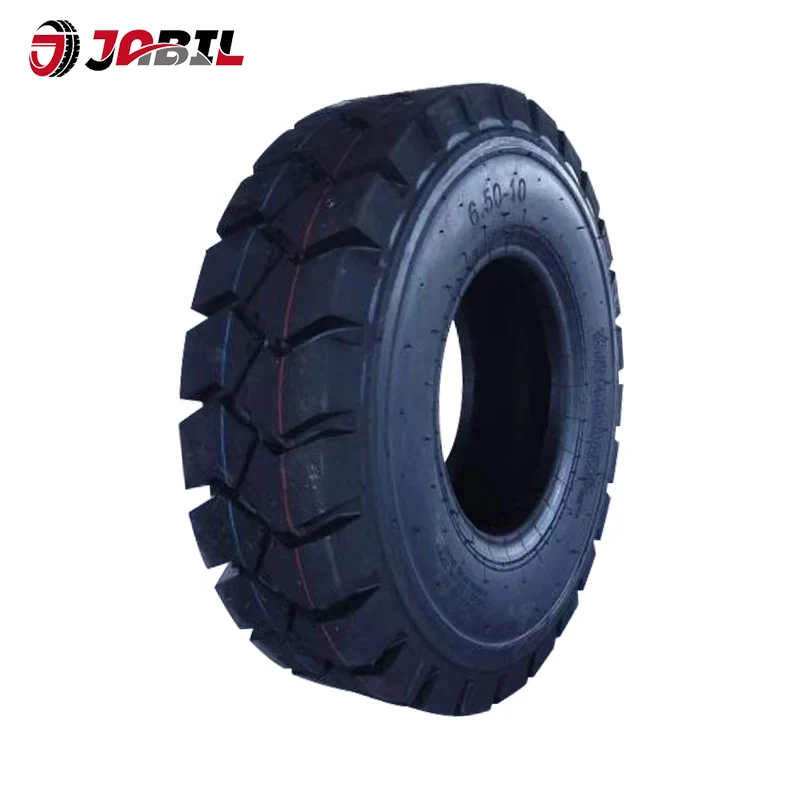
Examples: 6.50-10/5.0, 7.00-12/5.0, 8.25-15/6.5

  • 6.50 = nominal section width (inches)
  • 10 = nominal rim diameter (inches)
  • 5.0 = nominal rim width (inches)

Outer diameter affects passing ability, speed capability, and turning radius.
 Section width determines ground contact area, stability, and load-carrying capacity.
 Rim diameter must match the equipment’s rim exactly.

Do you know how to correctly select the tire size?

2. Load Capacity – The Safety Bottom Line
 

Tires have two load ratings:

  • Static load: maximum allowable stationary load per tire (kg or tons)
  • Dynamic load: allowable load when the vehicle is moving

3. Speed Rating – Defines Performance Limits
Higher speed = lower allowable load.

  • Typical for forklifts & warehousing: ≤16 km/h
  • Ports or heavy-duty applications: ≤10 km/h is safer

4. Hardness – Determines Performance Type
National standard range: 70±5 Shore A
This hardness offers good elasticity, excellent shock absorption, and strong grip — ideal for flat surfaces where operator comfort matters.

5. Wear Resistance & Physical Properties – Key to Tire Lifespan
Lower Akron abrasion value = better wear resistance.

6. Structure & Materials – Durability & Application Fit

  • Rubber solid tires: three-layer structure, excellent wear resistance, puncture-proof, zero maintenance
  • Polyurethane solid tires: lighter, superior wear & corrosion resistance, ideal for cleanrooms or special environments

2. Selection Process (Step-by-Step)

1 Confirm Equipment & Rim
Record the original factory specification (e.g. 7.00-12) and exact rim dimensions.

2 Calculate Total Load
Equipment self-weight + maximum payload
Distribute by axle: load per tire = total weight ÷ number of axles ÷ 2
Always leave a safety margin.

3 Match Speed & Operating Conditions

  • Indoor / smooth surfaces: up to 16 km/h
  • Outdoor / gravel / heavy duty: ≤10 km/h
  • Harsh or special environments: confirm dedicated compound with manufacturer.

4 Verify Compliance & Quality
 Prioritize tires meeting:

  • GB/T 10824-2022
  • GB/T 16622-2022
  • GB/T 41876-2022

5 Visual inspection: no cracks, bulges, delamination, or missing rubber.

3. Common Pitfalls to Avoid

1 Choosing size only, ignoring load index → overload → tire failure / blowout

2 Using high-hardness tires at higher speeds → excessive vibration, cracking, short lifespan

3 Ignoring speed/load derating factors → dynamic overload → major safety risk

4 Using standard tires in special conditions → rapid aging, slipping, floor marks / contamination

4. Our Export Service Advantages

1 20+ years specializing in industrial tires, engineering tires, solid tires, and inner tubes for export.

2 Flexible order types: full container load (FCL) + less-than-container load (LCL) / mixed loading; sample orders welcome.

3 Full export documentation package: customs clearance files, inspection reports, certificate of origin, legally binding after-sales warranty.

4 Main markets served: Southeast Asia, Middle East, Africa, South America, Russia, etc.

5 Support OEM branding, custom packaging, and standardized export procedures.

5. FAQ

Q1: What is the minimum order quantity for industrial tire export?
A: Full container orders preferred; many models support LCL mixed loading. Contact us for details.

Q2: Do you provide certification and customs clearance documents?
A: Yes — full set including packing list, commercial invoice, bill of lading, inspection certificate, etc., to ensure smooth customs clearance.

Q3: How do you ensure consistent tire quality?
A: Every batch undergoes appearance, dimension, pressure, and abrasion performance checks. Third-party inspection is supported.

Q4: Can you produce under our own brand?
A: Yes — full OEM service including logo, labeling, and custom packaging according to your brand requirements.

6. About Us

Jabil Rubber Co., Ltd. specializes in exporting industrial tires & OTR tires, delivering high cost-performance, stable, and reliable industrial tire solutions to global distributors and end-users.

Please provide your required sizes, quantities, and destination — we will reply with professional recommendations and a competitive quote within 1 working day.

Welcome to contact us!


Related News
Leave me a message
X
We use cookies to offer you a better browsing experience, analyze site traffic and personalize content. By using this site, you agree to our use of cookies. Privacy Policy
Reject Accept