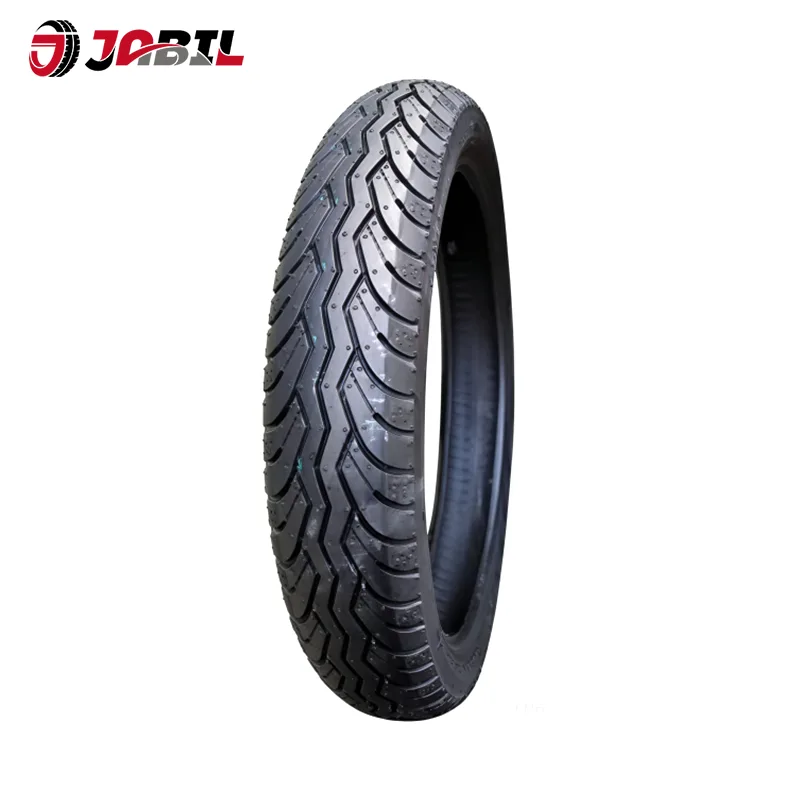
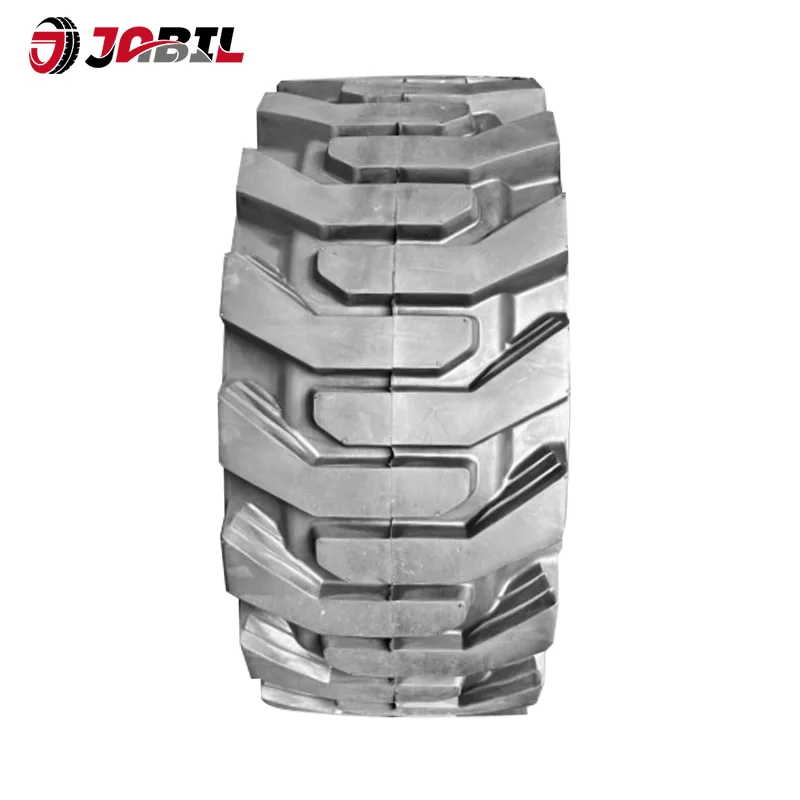
Clip-on Solid Forklift Tires
Changing forklift tires is a surprisingly disruptive task in most warehouse and logistics operations. The process—driving the forklift to the maintenance bay, jacking it up, removing the rim, pressing out the old tire with a hydraulic press, and pressing in the new one—typically takes anywhere from one hour to half a shift. During that time, the equipment is down, and operations are paused. Clip-on Solid Forklift Tires solve a simple problem: making tire replacement as straightforward as changing a spare wheel.
The Essence of Clip-on Design
Traditional press-fit solid tires rely on an interference fit—the tire's inner diameter is slightly smaller than the rim's outer diameter, and a hydraulic press forces it into place, relying on the rubber's elastic deformation to create clamping force. The drawback: pressing requires specialized equipment, skill, and time.
Clip-on solid tires take a different approach. A metal retaining ring is embedded in the tire sidewall. During installation, hydraulic equipment expands the elastic tire body, allowing the retaining ring to snap precisely into the annular groove on the rim edge. When the tire returns to its original shape, it forms a triple lock: mechanical retention from the metal ring, compressive stress from the elastic body, and friction from the bead. In short, it no longer depends on "pressing force" but on "mechanical retention."
The difference is directly reflected in the installation process: traditional press-fit requires a tire press; Clip-on does not. In most cases, replacing Clip-on tires does not require taking the forklift to the workshop—it can be done on-site. For warehouses or logistics centers operating multiple forklifts, this is the difference between one hour of downtime and fifteen minutes.
JABIL's Clip-on Solid Forklift Tires utilize 3D-scanning verification of rim fit geometry, with assembly tolerances held to micron-level precision. The metal retaining ring is case-hardened for surface hardness, and the rim groove is laser-hardened for wear resistance. The thermoset polyurethane compound maintains consistent volume across temperature variations, providing a constant clamping force on the retaining ring. This is not a "makeshift" design—it is a proven mechanical locking system.
Specifications & Load Ratings
The following table provides complete dimensions and load data for each Clip-on Solid Forklift Tire size. Load capacity decreases as speed increases—three speed ratings (10km/h, 16km/h, 25km/h) correspond to different load limits, with separate values for drive and steer axles.
|
Tire Size
|
Rim
|
Pattern
|
Overall Diameter mm
|
Section Width mm
|
Drive Width mm
|
Load Capacity (kg)
|
Other Forklift
16km/h
|
|
Balance Forklift
|
|
10km/h
|
16km/h
|
25km/h
|
|
Drive
|
Steer
|
Drive
|
Steer
|
Drive
|
Steer
|
|
4.00-8
|
3.00
|
YY-101/YY-102
|
400
|
111
|
102
|
1055
|
845
|
1020
|
765
|
950
|
715
|
730
|
15×4.5-8
(125/75-8)
|
3.00
|
YY-101/YY-102
|
370
|
109
|
100
|
905
|
725
|
675
|
655
|
805
|
605
|
625
|
|
15×6.5-8
|
5.00
|
YY-110
|
377
|
165
|
156
|
1010
|
820
|
825
|
805
|
910
|
670
|
680
|
|
5.00-8
|
3.00
|
YY-101/YY-102
|
455
|
125
|
117
|
1210
|
970
|
1175
|
880
|
1095
|
820
|
840
|
16×6-8
(150/75-8)
|
4.33
|
YY-101/YY-102
|
404
|
147
|
135
|
1500
|
1200
|
1445
|
1085
|
1345
|
1010
|
1035
|
18×7-8
(180/70-8)
|
4.33
|
YY-101/YY-102
|
440
|
155
|
150
|
2350
|
1880
|
2265
|
1700
|
2110
|
1585
|
1620
|
|
18×7-8(Wide)
|
4.33
|
YY-102
|
449
|
172
|
166
|
2720
|
2110
|
1480
|
1980
|
2400
|
1850
|
1900
|
|
18×7-9
|
4.33
|
YY-101/YY-102
|
452
|
155
|
—
|
2230
|
1780
|
2150
|
1615
|
2005
|
1505
|
1540
|
|
18×7-10
|
4.50
|
YY-101
|
455
|
154
|
148
|
2980
|
2450
|
1780
|
2360
|
2800
|
2250
|
2200
|
|
6.00-9
|
4.00
|
YY-101/YY-102
|
515
|
143
|
131
|
1920
|
1535
|
1855
|
1390
|
1730
|
1295
|
1325
|
|
7.00-9
|
5.00
|
YY-101/YY-102
|
536
|
157
|
150
|
2370
|
2015
|
2805
|
1925
|
2370
|
1750
|
1785
|
21×8-9
(200/75-9)
|
6.00
|
YY-101/YY-102
|
505
|
192
|
182
|
2810
|
2250
|
2715
|
2035
|
2530
|
1895
|
1940
|
|
200/50-10
|
6.50
|
YY-101/YY-102
|
441
|
187
|
127
|
2370
|
1900
|
2290
|
1720
|
2135
|
1605
|
1630
|
|
6.50-10
|
5.00
|
YY-101/YY-102
|
566
|
153
|
145
|
2840
|
2110
|
2545
|
1910
|
2370
|
1780
|
1820
|
23×9-10
(225/75-10)
|
6.50
|
YY-101/YY-102
|
561
|
191
|
184
|
4005
|
3205
|
3845
|
2885
|
3605
|
2705
|
2765
|
|
7.00-12
|
5.00
|
YY-101/YY-102
|
643
|
176
|
163
|
3015
|
2410
|
2910
|
2185
|
2710
|
2035
|
2075
|
|
23×10-12
|
8.00
|
YY-101/YY-102
|
586
|
227
|
224
|
3980
|
3420
|
3820
|
3210
|
3586
|
3010
|
2980
|
|
8.25-12
|
5.00
|
YY-101/YY-102
|
696
|
189
|
181
|
3326
|
2660
|
3215
|
2410
|
2995
|
2245
|
2295
|
27×10-12
(250/75-12)
|
8.00
|
YY-101
|
661
|
232
|
221
|
4465
|
3570
|
4315
|
3235
|
4020
|
3015
|
3080
|
|
5.50-15
|
4.50
|
YY-106
|
653
|
151
|
135
|
2830
|
2095
|
2705
|
2000
|
2455
|
1820
|
1675
|
|
6.00-15
|
4.50
|
YY-106
|
653
|
151
|
135
|
2830
|
2095
|
2705
|
2000
|
2455
|
1820
|
1675
|
28×9-15
(8.15-15)
(225/70-15)
|
7.00
|
YY-101/YY-102
|
691
|
208
|
196
|
4090
|
3270
|
3945
|
2960
|
3675
|
2755
|
2820
|
|
28×9-16
|
6.50
|
YY-101
|
675
|
190
|
—
|
4090
|
3270
|
—
|
—
|
3675
|
2755
|
—
|
250-15
(250/70-15)
|
7.50
|
YY-101/YY-102
|
693
|
228
|
217
|
4366
|
3400
|
4220
|
3160
|
3930
|
2955
|
3010
|
|
7.00-15
|
5.50
|
YY-101/YY-102
|
711
|
187
|
173
|
3590
|
2870
|
3465
|
2600
|
3225
|
2420
|
2475
|
|
7.50-15
|
5.50
|
YY-101
|
752
|
189
|
180
|
3690
|
2950
|
3425
|
2570
|
3190
|
2395
|
2450
|
|
8.25-15
|
6.50
|
YY-101/YY-102
|
810
|
204
|
192
|
4940
|
3950
|
4765
|
3575
|
4440
|
3330
|
3045
|
300-15
(315/70-15)
|
8.00
|
YY-101
|
788
|
238
|
234
|
5990
|
4700
|
5780
|
4335
|
5380
|
4037
|
4130
|
28×12.5-15
(345/45-15)
|
9.75
|
YY-109
|
706
|
300
|
—
|
5735
|
4590
|
5540
|
4165
|
5170
|
3890
|
3955
|
|
355/65-15
|
9.75
|
YY-101
|
818
|
302
|
279
|
6140
|
4940
|
6300
|
5650
|
5950
|
4190
|
5450
|
|
8.25-20
|
6.5/7.0
|
YY-101
|
933
|
212
|
200
|
5425
|
4340
|
5420
|
3930
|
4880
|
3735
|
3475
|
|
9.00-20
|
6.5/7.0
|
YY-101
|
948
|
222
|
210
|
6450
|
5160
|
6235
|
4675
|
5805
|
4355
|
4450
|
|
10.00-20
|
7.5/8.0
|
YY-101/SM
|
1038
|
264
|
255
|
7240
|
5795
|
6995
|
5240
|
6610
|
4885
|
4995
|
|
11.00-20
|
7.5/8.0
|
YY-101
|
1038
|
264
|
255
|
7560
|
6050
|
7300
|
5490
|
6810
|
5120
|
5210
|
|
12.00-20
|
8.0/8.5
|
YY-101
|
1086
|
282
|
271
|
8800
|
7000
|
8500
|
6925
|
8000
|
6450
|
6595
|
|
The Real Value of Clip-on Design
When a forklift is sitting idle waiting for a tire change, the loss is not just the machine's operating time—it's the throughput it should have delivered, the aisles it should have cleared, and the next operation it should have fed. For a single-shift warehouse, the direct and indirect cost of a one-hour tire change typically ranges from $200 to $500. For a 24-hour logistics center, that figure is even higher.
The core value of Clip-on solid tires is that it transforms tire replacement from a "maintenance event" into a "routine operation." No press required, no need to drive the forklift to the service bay—the change can be done on-site. For multi-forklift facilities, this means tire changes no longer need to be scheduled into maintenance calendars; they can be performed during shift changes.
At the same time, solid tires themselves have significantly lower maintenance costs than pneumatic tires. No pressure checks, no patches, no blowout risks. JABIL's solid tires utilize a three-layer construction (tread layer, cushion layer, base layer) that outperforms single-layer designs in heat dissipation and rebound resilience. In one documented case, a Chinese logistics port that switched 50 forklifts from pneumatic to JABIL solid tires saw annual tire-related downtime drop from 210 hours to 12 hours, and maintenance costs decrease by 63%. The Clip-on design further reduces the time required for each tire change.
Equipment Compatibility & Application Scenarios
Clip-on Solid Forklift Tires cover the full range of forklifts—from light-duty electric models to heavy-duty diesel units:
• Electric and Diesel Forklifts: Standard configuration for warehouse material handling and loading/unloading operations.
• Pallet Jacks and Stackers: Applications requiring frequent turning and precise maneuverability, where the Clip-on design offers clear advantages during tire replacement.
• Warehouse and Logistics Equipment: Including automated guided vehicle (AGV) support wheels and various storage/retrieval machinery.
• Industrial and Manufacturing Vehicles: In metalworking, glass manufacturing, chemical plants—environments with high temperatures and sharp debris—solid tires' puncture resistance and heat tolerance are particularly valued.
• Airport Ground Support Equipment: Baggage tractors, cargo loaders, and other equipment requiring high reliability.
Tread pattern options include YY-101, YY-102, YY-106, YY-109, and YY-110. YY-101/YY-102 are general-purpose patterns suitable for most indoor and outdoor conditions; YY-106 and YY-110 are selected when specific traction requirements arise. Color options include standard black or non-marking—the latter is ideal for food processing, pharmaceutical, and precision electronics industries where tire marks on floors are not acceptable.
Clip-on Solid Tires vs. Alternatives
|
Parameter
|
Clip-on Solid Tire
|
Conventional Press-Fit Solid Tire
|
Pneumatic Tire
|
Foam-Filled Tire
|
|
Installation Method
|
Snap-on, no press required
|
Press-fit, requires hydraulic press
|
Standard mounting, requires inflation
|
Standard mounting, requires filling
|
|
Replacement Time
|
Short (can be done on-site)
|
Long (needs workshop)
|
Moderate
|
Moderate
|
|
Puncture Risk
|
None
|
None
|
High
|
Low (may leak over time)
|
|
Maintenance
|
No pressure checks
|
No pressure checks
|
Weekly checks + repairs
|
Minimal
|
|
Service Life (harsh conditions)
|
3–5× longer than pneumatic
|
3–5× longer than pneumatic
|
Baseline (6–18 months)
|
1.5–2× longer than pneumatic
|
|
Heat Buildup
|
Low (three-layer structure dissipates heat)
|
Low
|
Moderate
|
Higher (foam insulates)
|
|
Load Capacity
|
High (exceeds equivalent pneumatic)
|
Highest
|
Lower than equivalent solid
|
Comparable to solid
|
|
Total Cost of Ownership
|
Lowest
|
Low
|
Highest
|
Moderate
|
Clip-on solid tires offer identical performance to press-fit solid tires—same rubber compound, same three-layer construction, same tread patterns. The only difference is in the installation method. And that difference happens to be the most valuable one for warehouse and logistics operations.
Frequently Asked Questions
Q1: Is there any performance difference between Clip-on and press-fit solid tires?
No. Clip-on solid tires use the same rubber compound, tread design, and structural construction as press-fit models. The only difference is the mounting mechanism—Clip-on uses mechanical retention via a metal retaining ring and rim groove, eliminating the need for a hydraulic press.
Q2: Could the metal retaining ring loosen or come off during operation?
No. The Clip-on system creates a triple lock: mechanical retention from the ring, compressive stress from the elastic body, and friction from the bead. The retaining ring is case-hardened, and the rim groove is laser-hardened. Routine maintenance only requires cleaning the metal interface to remove any mineral dust or chemical deposits that might affect the mechanical lock.
Q3: What types of equipment are Clip-on solid tires suitable for?
Electric forklifts, diesel forklifts, pallet jacks, stackers, airport ground support equipment, and various industrial material handling vehicles. As long as the rim size matches, Clip-on tires are compatible with the vast majority of forklift and handling equipment.
Q4: What is the difference between non-marking and black tires?
Non-marking tires use a specialized compound that leaves no dark marks on floors. They are preferred in food processing, pharmaceutical, and precision electronics facilities. Their wear resistance is comparable to standard black solid tires.