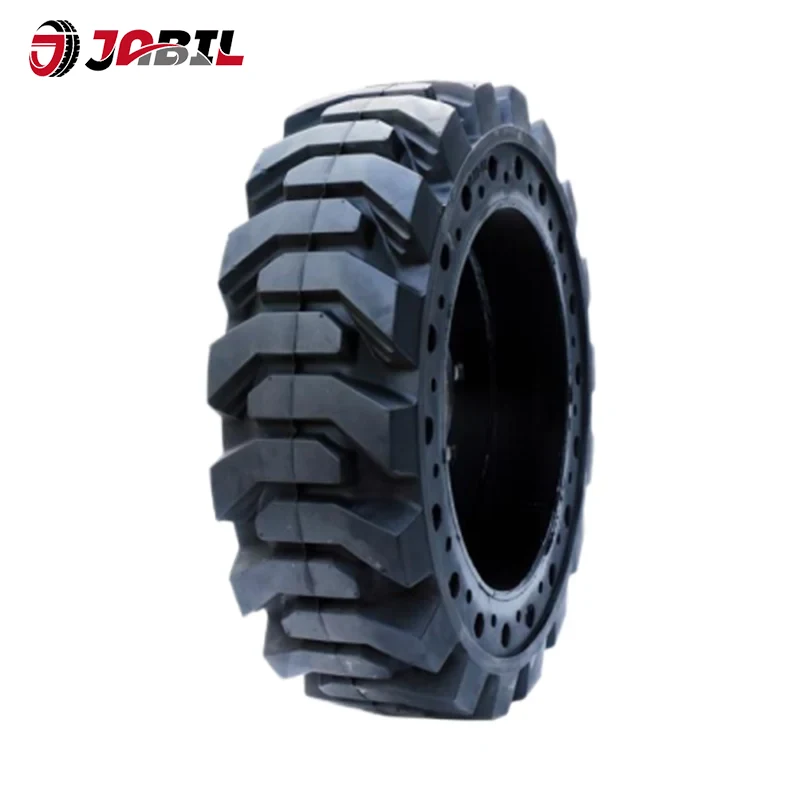
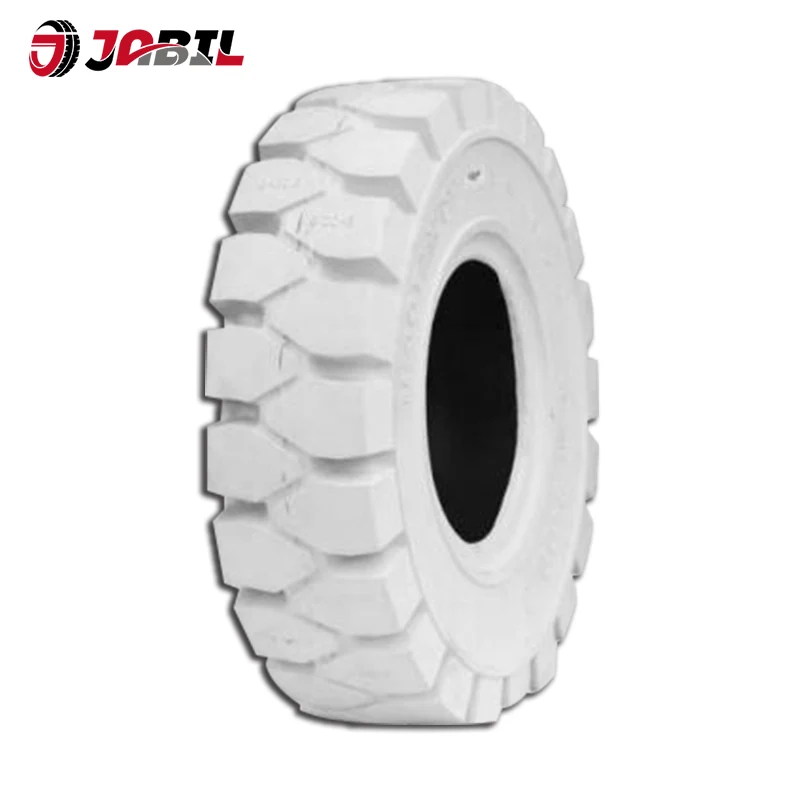
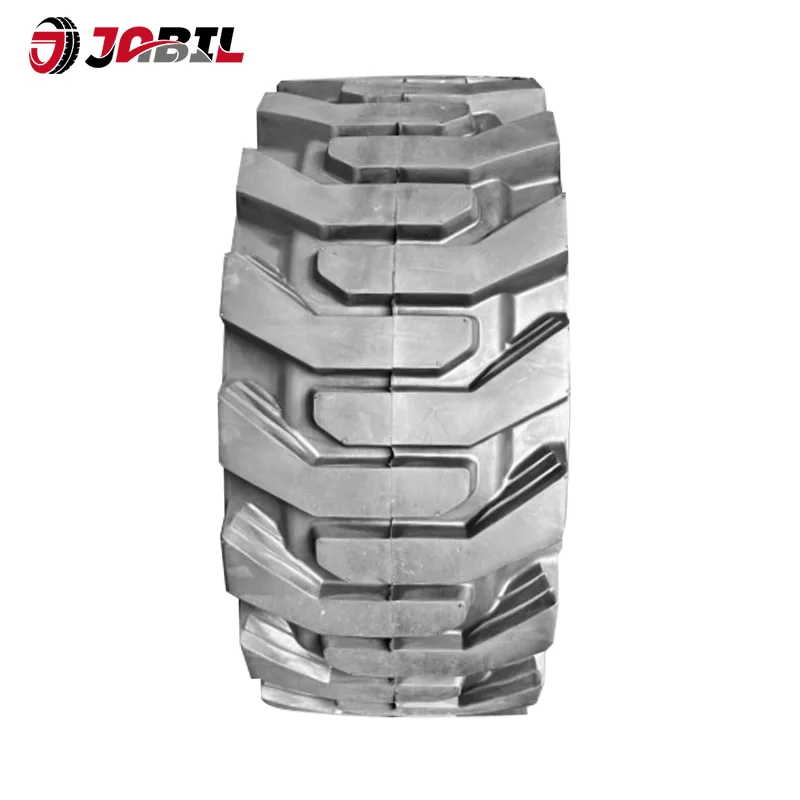
Industrial Solid Skid Steer Tires
Skid steer loaders are among the most versatile machine classes in the compact equipment segment, used across construction, demolition, landscaping, agriculture, and recycling industries. The tires on these machines determine not just traction and ride quality, but also uptime, operating costs, and job site safety. Industrial Solid Skid Steer Tires—engineered with web-type technology that combines quick installation with puncture-proof durability—address the core operational challenges that fleet managers and equipment operators face daily.
What Makes Skid Steer Tire Selection Different?
Unlike over-the-road vehicles, skid steers operate in environments where tire failure isn't just an inconvenience—it's a production stopper. A skid steer with a flat tire on a demolition site or recycling yard doesn't roll to the side of the road; it sits in the middle of active work, blocking material flow, idling crew, and burning job site hours.
The industrial duty cycle for skid steer tires is defined by three factors that distinguish it from standard construction equipment:
Factor 1: Puncture Exposure. Skid steers work in debris-laden environments—rebar, scrap metal, broken concrete, demolition waste, and sharp aggregate. Pneumatic tires in these conditions have a documented failure rate that makes them a recurring cost item rather than a capital investment.
Factor 2: High Torsional Load. The skid steer's turning mechanism—locking one side's wheels while driving the opposite side—subjects tires to extreme lateral forces. Tires must resist chunking, tearing, and sidewall damage under conditions that would compromise lesser constructions.
Factor 3: Variable Surface Transitions. A single shift might move a skid steer from concrete apron to gravel lot to mud-slicked excavation to paved road. The tire must provide consistent traction across all surfaces without compromising ride quality or stability.
Industrial Solid Skid Steer Tires are engineered specifically for this duty cycle—not as a compromise between pneumatic and solid, but as a purpose-built solution for the unique demands of skid steer operation.
Core Technical Features: Beyond "Just a Solid Tire"
The web-type construction of Industrial Solid Skid Steer Tires represents a specific engineering approach, not a generic solid tire design. Three technical characteristics distinguish this product line:
Quick Installation Without Specialized Equipment. Traditional press-fit solid tires require hydraulic presses and trained technicians for mounting—a process that can take hours and tie up maintenance resources. The web-type design mounts similarly to pneumatic tires, enabling rapid installation without specialized equipment. For fleet operators managing multiple machines, this translates to reduced downtime during tire changes and the ability to perform replacements with in-house maintenance staff.
Weight-Optimized Construction. Industrial solid tires are inherently heavier than pneumatics—a fact that affects machine responsiveness, fuel consumption, and component wear. The web-type design reduces tire weight compared to conventional solid constructions, minimizing the impact on vehicle load and improving machine efficiency without sacrificing durability.
Thermal Management Through Web Structure. Heat buildup is the primary factor limiting solid tire service life. As the tire flexes under load, internal friction generates heat; if that heat cannot dissipate, the rubber compound degrades, leading to premature failure. The web pattern structure promotes faster heat dissipation, maintaining compound integrity during extended operation and extending service life.
Shock Absorption Through Structural Design. Traditional solid tires transmit more vibration to the machine and operator than pneumatics—a trade-off many operators accept for puncture resistance. The web-type construction provides superior shock absorption compared to conventional solids, reducing operator fatigue during extended shifts and minimizing vibration-related wear on machine components.
Load Ratings & Speed-Dependent Capacity
The following table provides complete load capacity data for the Industrial Solid Skid Steer Tires product line. Load ratings are provided for both 10km/h and 26km/h operating speeds, with separate ratings for drive and steer axle positions. The speed-dependent nature of these ratings is critical for proper equipment matching—operating a tire beyond its rated capacity at a given speed accelerates wear and increases failure risk.
|
Tire Size
|
Rim
|
Pattern
|
Diameter mm
|
Section Width mm
|
Drive Width mm
|
Load Capacity (kg)
|
|
10km/h
|
26km/h
|
|
Drive
|
Steer
|
Drive
|
Steer
|
10-16.5
(31×6×10)
|
10-16.5
|
YY-105
|
756
|
255
|
239
|
4230
|
3080
|
3630
|
2680
|
12-16.5
(33×6×11)
|
12-16.5
|
YY-105
|
820
|
273
|
264
|
4575
|
3875
|
3815
|
3400
|
20.5/70-16
(36×7×11)
|
FB
|
YY-105
|
895
|
284
|
277
|
6450
|
5350
|
5870
|
4550
|
Where Industrial Solid Tires Outperform?
Industrial Solid Skid Steer Tires are not a universal solution—they are a targeted solution for specific operating environments where the limitations of pneumatic tires become operational liabilities.
Demolition & Scrap Yards. These environments are defined by sharp debris—rebar, metal fragments, broken concrete, and construction waste. Pneumatic tires in these conditions fail frequently, with punctures occurring daily in high-intensity operations. Solid tires eliminate this failure mode entirely.
Recycling & Waste Transfer Stations. Recycling facilities present similar hazards—shredded metal, glass fragments, and abrasive materials. The cut and chunk resistance of industrial solid tires is essential for maintaining uptime in these environments.
Construction Sites with Mixed Surfaces. A single construction site might include paved access roads, gravel staging areas, mud-saturated excavation zones, and debris-strewn work areas. The web pattern tread provides consistent traction across these transitions while the solid construction eliminates the risk of puncture-related downtime.
Landscaping & Agriculture. While these environments are less hazardous than demolition sites, they present unique challenges: soft soil that requires aggressive traction, paved surfaces that demand non-marking performance, and extended operating hours that benefit from improved ride comfort.
Industrial Solid vs. Pneumatic vs. Foam-Filled
The following comparison evaluates Industrial Solid Skid Steer Tires against three common alternatives in the skid steer tire market:
|
Parameter
|
Industrial Solid Tire (Web Type)
|
Pneumatic Skid Steer Tire
|
Foam-Filled Pneumatic
|
Conventional Solid Tire
|
|
Installation Method
|
Quick—no press required
|
Standard mounting—requires inflation
|
Standard mounting—requires filling
|
Press-fit—requires hydraulic press
|
|
Tire Weight
|
Lightweight—reduces vehicle load impact
|
Lightweight
|
Heavy—filled with foam
|
Heavier—adds unsprung weight
|
|
Puncture Resistance
|
100%—solid construction eliminates flats
|
Poor—vulnerable to punctures
|
Good—foam resists punctures
|
100%—solid construction
|
|
Shock Absorption
|
Good—web structure provides cushioning
|
Excellent—air provides cushioning
|
Firm—minimal cushioning
|
Firm—minimal cushioning
|
|
Service Life (harsh conditions)
|
3–5× longer than pneumatic
|
Baseline—shortest service life
|
1.5–2× longer than pneumatic
|
3–5× longer than pneumatic
|
|
Heat Dissipation
|
Fast—web structure promotes cooling
|
Good—air circulation aids cooling
|
Poor—foam retains heat
|
Moderate—solid retains heat
|
|
Load Capacity
|
Higher than equivalent pneumatic
|
Lower than equivalent solid
|
Similar to solid
|
Highest
|
|
Total Cost of Ownership
|
Lowest—long life + quick installation
|
Highest—frequent replacements
|
Medium—moderate life, higher initial cost
|
Low—long life, higher installation cost
|
Frequently Asked Questions
Q1: What is the difference between a "web type" solid tire and a conventional solid tire?
The web-type solid tire is a technological combination of the traditional pneumatic rim-type solid tire and the steel rim press-fit solid tire. This hybrid design enables quick and easy installation similar to pneumatic tires—no hydraulic press required—while delivering the puncture-proof durability of conventional solid tires. The web structure also provides better shock absorption and faster heat dissipation than conventional solid designs.
Q2: How does the load capacity of industrial solid tires compare to pneumatic tires in the same size?
Solid tires typically have higher load carrying capacity than equivalent pneumatic sizes. This higher load capacity is due to the solid construction's ability to distribute weight more efficiently and the absence of air pressure limitations.
Q3: What is the expected service life of industrial solid skid steer tires in demanding conditions?
Solid tires typically last at least three times longer than pneumatic tires in comparable applications. Under harsh conditions—demolition sites, recycling yards, and scrap handling—the lifespan can extend to three to five times longer than pneumatics. This extended service life, combined with elimination of puncture-related downtime, makes solid tires more cost-effective in the long run despite higher initial cost.
Q4: Are these tires suitable for paved surface operation?
Yes. The YY-105 tread pattern provides traction suitable for paved surfaces and heavy-duty service. The web pattern design offers consistent performance across varied surfaces—from concrete to gravel to debris—making it appropriate for operations that transition between surfaces throughout the workday.
Q5: How does the 26km/h load rating compare to the 10km/h rating?
The load capacity decreases as speed increases. For example, the 20.5/70-16 (36×7×11) size is rated at 6,450 kg on drive axles at 10km/h but drops to 5,870 kg at 26km/h. This reduction reflects the increased heat generation and dynamic forces at higher speeds. When selecting tires, operators should use the load rating that corresponds to their typical operating speed.